
Introduction
Did you know that the number one reason couples fight isn’t money, sex, or even family issues — it’s communication problems? Most of the time, those problems don’t come from big betrayals but from small misunderstandings that pile up over time. A misread text, an assumption about tone, or unspoken expectations can all lead to unnecessary conflict.
The good news? Misunderstandings in relationships are preventable. By learning the dos and don’ts of communication, you and your partner can avoid unnecessary arguments and build a stronger, healthier connection.
Let’s dive into the communication habits you should start practicing — and the ones you need to avoid — to stop misunderstandings from ruining your relationship.
Do these things: Healthy Communication Habits That Strengthen Your Relationship
Do Practice Active Listening with Your Partner
Active listening means giving your full attention, repeating back what you heard, and checking if you understood correctly. It shows your partner that you truly care about what they’re saying.
Why it works: It prevents small miscommunications from spiraling and builds trust in the relationship.
Do Pay Attention to Nonverbal Cues
Body language, tone, and facial expressions often say more than words. Notice your own cues (like sighing or crossing your arms) and pay attention to your partner’s.
Why it works: Reading the full message — not just the words — helps prevent misinterpretation.
Do Set Aside Time for Meaningful Conversations
Rushed texts and quick exchanges can easily lead to misunderstandings. Schedule regular “relationship check-ins” to talk about feelings, challenges, and victories.
Why it works: Consistent connection makes it easier to resolve small issues before they grow.
Do Stay Calm During Disagreements to Prevent Escalation
When tempers flare, misunderstandings intensify. Take a pause if you need to calm down, but make sure to return to the conversation.
Why it works: Staying calm keeps the focus on resolution, not winning the fight.
Do Validate Your Partner’s Feelings
You don’t have to agree to acknowledge emotions. Saying “I understand this upset you” can instantly de-escalate tension.
Why it works: Validation makes your partner feel respected and valued, even when you see things differently — reducing defensiveness and increasing trust.
Do Use Positive Reinforcement
Thank your partner when they express themselves clearly or calmly. Positive feedback encourages more of the same.
Why it works: Reinforcing healthy communication creates a cycle of more openness, kindness, and clarity in the relationship.
Do Practice Empathy
Before reacting, try to see the situation from your partner’s point of view.
Why it works: Empathy shifts the focus from being “right” to being connected.
Don't do these things: Habits That Create Misunderstandings
Don’t Ignore the Common Causes of Misunderstandings
Stress, distractions, unspoken expectations, and different communication styles all create miscommunication. Pretending these don’t exist only makes conflict more likely.
Why it matters: Ignoring the root cause of issues means they’ll keep resurfacing, often in bigger and more damaging ways.
Don’t Make Assumptions — Ask Clarifying Questions Instead
Never assume your partner’s meaning or feelings. Instead of jumping to conclusions, ask: “What did you mean by that?”
Why it matters: Asking prevents defensiveness and clears up confusion immediately.
Don’t Bring Up the Past During Disagreements
Dragging in old arguments makes resolution nearly impossible. Stay focused on the current issue.
Why it matters: Rehashing past mistakes creates resentment and prevents healing, making your partner feel unsafe in future conversations.
Don’t Interrupt While Your Partner Is Speaking
Cutting them off signals disrespect and fuels defensiveness. Let them finish before responding.
Why it matters: Interruptions break trust and stop your partner from feeling heard, which fuels more misunderstandings.
Don’t Use Sarcasm or Passive-Aggressive Comments
These create confusion and frustration. Speak directly and kindly instead.
Why it matters: Sarcasm often masks frustration but leaves your partner guessing at your true feelings, which breeds more miscommunication.
Don’t Text About Serious Issues
Texting leaves too much room for misinterpretation. Save important conversations for face-to-face or video chats.
Why it matters: Without tone or body language, texts are easy to misread and can escalate conflicts that could have been avoided.
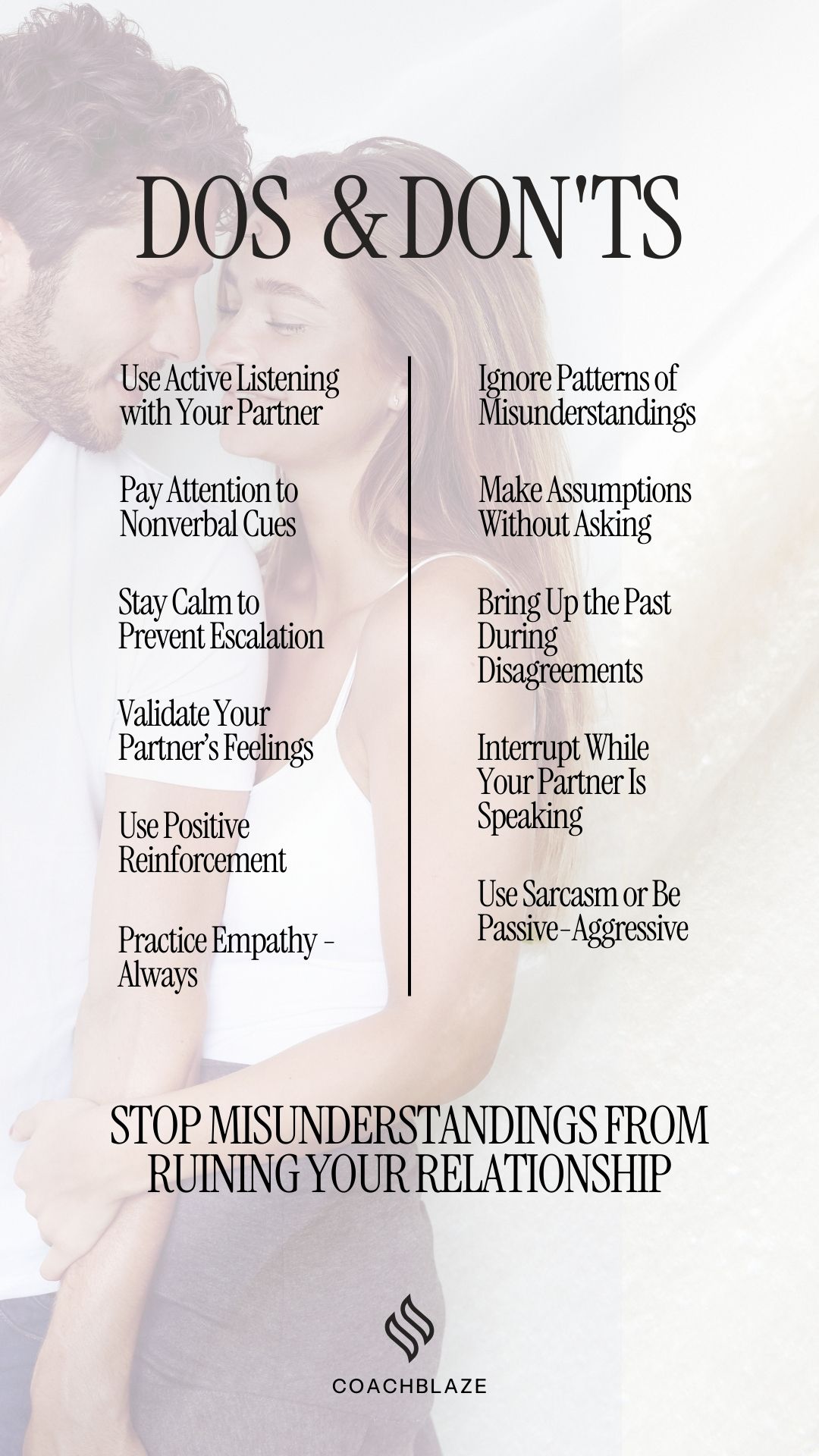
Coach tip: Create a "Dos & Don'ts" List Together
Want to take this to the next level? Sit down with your partner and create your own personalized “Dos and Don’ts” list.
How to do it:
- Each partner shares one “do” that helps them feel heard.
- Each partner shares one “don’t” that creates frustration.
- Write them down and revisit the list when conflicts arise.
Why it works: This turns communication into a team effort. By building the list together, you’re agreeing on shared rules for healthier conversations, which reduces future misunderstandings.
Share this post with your partner so you can start practicing the dos and don’ts together.
Conclusion
Misunderstandings are inevitable, but they don’t have to ruin your relationship. By practicing the dos — like active listening, empathy, and validating feelings — and avoiding the don’ts — like assumptions, sarcasm, and interrupting — you can build trust, reduce conflict, and strengthen your connection.
Healthy communication isn’t about being perfect; it’s about being intentional. Start today by choosing one “do” to practice and one “don’t” to avoid. You’ll be surprised at how quickly your relationship improves.
Frequently asked questions
What are the most common causes of misunderstandings in relationships?
Stress, distractions, unspoken expectations, and different communication styles.
How can I stop misunderstandings with my partner?
Practice active listening, ask clarifying questions, and validate their feelings.
Why is body language important in relationships?
Nonverbal cues often reveal emotions that words don’t, helping prevent misinterpretation.
Can misunderstandings ruin a relationship?
Yes — if ignored. But with better communication habits, they can actually bring you closer.
Related Explore →

From Diapers to Date Nights: How Busy Parents Can Keep Their Love Alive
Parenting is chaos—but love doesn’t have to take a back seat. Discover fun, realistic ways to reconnect and keep your spark alive after kids.

Parenting on Empty? Why the Best Gift You Can Give Your Kids Is a Strong Relationship
Running on fumes as parents? Learn why nurturing your relationship isn’t selfish—it’s the secret to a happier, more stable home for your kids.

Lost in the Kid Chaos? How to Reconnect and Prioritize Your Relationship Again
Feeling disconnected as parents? Learn how to reconnect and prioritize your relationship again—without adding stress to your already full life.

Ready for Marriage? Find Clarity and Confidence with Premarital Coaching
Discover how premarital coaching in San Diego and beyond helps couples find clarity, build confidence, and start marriage with a strong foundation of…

How to Get Your Boyfriend or Husband to Try Couples Coaching (Even If He’s Reluctant)
Struggling to convince your boyfriend or husband to try couples coaching? Learn practical ways to talk about it, overcome reluctance, and show him…

Moving in Together: Expert Tips & Checklist for a Smooth Transition With Your Partner
Moving in together for the first time? Discover expert tips, a practical checklist, and relationship advice to make the transition smooth. Learn how…

50 Small Gestures That Make a Big Difference in Your Relationship (Simple Ways to Show Love Everyday)
Discover 50 small but powerful gestures that can strengthen your relationship, deepen intimacy, and bring back the spark. From everyday actions to…

How to Show Love When Life Gets Busy: Simple Ways Busy Couples Can Stay Connected
Discover simple, heartfelt ways to show love when life gets busy. Learn daily habits, quick gestures, and meaningful connection tips that help busy…

From Roommates to Romance: How to Reignite Passion in a Long-Term Relationship
Feeling like roommates instead of lovers? Learn how to reignite passion in a long-term relationship, bring back the spark in your marriage, and…

10 Daily Habits Happy Couples Swear By to Stay Connected and In Love
Discover the top 10 daily habits happy couples use to stay connected, improve intimacy, and keep love alive. Learn simple rituals and proven tips to…
Build more meaningful connections.
Every couple has a story – and the best parts are still unwritten. Wherever you are on your journey, I will help you write the next chapter of your love story.
New Sparks
Turn new love into lasting love with coaching that deepens connection and a foundation for forever.
Old Flames
Reignite passion and restore intimacy with coaching that helps your love burn brighter than ever.
Glow Embers
Strengthen your bond and parent as a team with coaching that keeps your love glowing.